


It usually arrives in the evening. Dinner was lovely, nothing unusual about it, and yet an hour later you’re sitting on the couch feeling swollen and uncomfortable, quietly undoing the top button and wondering what you ate that you shouldn’t have.
It can become such a familiar feeling that most of us stop questioning it - something uncomfortable to tolerate, rather than a cue to slow down and pay attention.
But when bloating does show up, one of the gentlest places to start is also one of the oldest: a warm cup of tea, made from thoughtfully chosen herbs.
The short answer
Some of the herbs traditionally used to support digestion include peppermint, fennel and ginger. Peppermint has been used to support digestive comfort, fennel has been used for centuries to ease trapped wind and ginger is traditionally used to support healthy digestion. Liquorice and calendula have also been traditionally used for their soothing qualities, while bitter herbs like angelica root have a long history of use around digestion.
Why these herbs, and what each one does
Does peppermint tea help with bloating?
Peppermint is one of the most widely recognised herbs for digestive support. Its naturally occurring compounds have been studied for their effect on the smooth muscles of the digestive tract, which helps explain its long history of traditional use for digestive comfort.
It’s also why peppermint remains such a familiar ingredient in herbal teas for bloating and digestion, particularly after meals.
What about fennel and ginger?
Fennel seeds are what herbalists call a carminative: a herb traditionally used to help the body release trapped wind rather than hold onto it. In parts of the world, fennel seeds are still offered at the end of a meal for exactly this reason.
Ginger works a little differently. It has a long history of traditional use for digestive comfort and is perhaps best known for its association with settling the stomach and nausea.
Liquorice
Liquorice root is what’s known as a demulcent. It has a soothing quality and has been traditionally used to comfort the digestive system. It also lends a natural sweetness, which is why a blend containing it rarely needs sugar or honey.
It does come with a genuine caveat, which we’ve included below.
Bitters and soothing flowers
Angelica root is a traditional bitter. Bitter herbs have long been used around meals to support digestion, with their distinctive taste thought to encourage the body’s natural digestive processes.
Calendula flowers round the blend out, traditionally used for their gentle, soothing qualities.
What to look for in a tea
Actual herbs, not just flavouring. Look for real herbs rather than relying on flavouring alone. If you’re choosing a herbal tea for its traditional uses, the herbs themselves should appear clearly on the ingredient list.
Caffeine-free. If you’re drinking it in the evening, which is when bloating often tends to show up, a caffeine-free blend makes it easier to incorporate into your wind-down routine.
A considered ingredient list. You should be able to read the ingredients and understand why they’re there. Look for a thoughtfully formulated blend where each herb has a purpose.
Loose leaf where you can. Loose herbs have room to unfurl as they brew and allow you to avoid microplastics that may be present in tea bags.

What’s in our Gut Health Tea Blend
We built our Gut Health Tea Blend around six organic ingredients: organic ginger, organic liquorice, organic fennel seeds, organic peppermint, organic angelica root and organic calendula flowers.
That’s the whole list - no flavouring, no bulking herbs, nothing included simply for appearance. Each ingredient has been thoughtfully selected for its traditional use, creating a considered blend of herbs that have long been associated with digestion and digestive comfort.
It’s organic, caffeine-free, non-GMO, vegan-friendly and has no added sugar - the result is a naturally sweet, gently aromatic tea, with the freshness of peppermint and warmth of liquorice and ginger - comforting enough to become something you genuinely look forward to at the end of the day. An 80g pouch makes around forty cups, which works out at about 65 cents a serve.
How to brew herbal tea
Giving herbal tea enough time to brew can make more difference than you might expect. Allowing the herbs to steep gives their natural flavour and character time to fully infuse into the water.
Add one heaped teaspoon - about 2g - per cup of boiled water. Brew for at least five minutes, or longer if you like it stronger. Sweeten with honey if you’d like, though most people find it doesn’t need it.
It can be enjoyed at any point in the day, but we especially love it in the evening. A warm cup after dinner can become a quiet signal that the day is winding down.
A note before making it a daily ritual
Liquorice is a genuinely useful herb, but it isn’t right for everyone. Consumed regularly and in quantity, it can affect blood pressure and potassium levels, so if you have high blood pressure, a heart or kidney condition, or you take medication that could be affected, it’s worth a conversation with your GP or naturopath before making it a daily habit.
Peppermint has one quirk worth knowing too: the same relaxing effect associated with its use for digestive comfort can also relax the valve at the top of the stomach. If you’re prone to reflux, peppermint may occasionally make it worse rather than better.
The blend contains herbal ingredients and is formulated for adults - we don’t recommend it for children under fifteen. If you’re pregnant or breastfeeding, please have your healthcare practitioner look over the ingredient list before drinking it.
None of this is a reason to avoid herbal tea. It’s a reason to know what’s in your cup.
Making it a ritual
The tea is only one part of the ritual. The pause around it matters, too.
Five minutes of brewing creates five minutes to step away from the day. To let the pace soften. To notice how you're feeling before moving into the evening.
Pair this with gratitude. Before bed, write down three things you’re grateful for and sit with each of them for a moment. It costs nothing, takes very little time, and gives the tea something to be part of, rather than something you simply drink.

Where to start
If bloating has become a familiar part of your evening, a thoughtfully formulated herbal tea can be a gentle place to begin.
One cup. Five quiet minutes. A chance to nourish your body, acknowledge the day and begin to wind down.
Because lasting wellness rarely comes from doing everything at once. More often, it's built through small rituals you enjoy enough to return to.
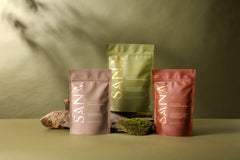
Explore our Health Tea Blends →
Some ingredients may not be suitable for people with certain conditions, or for women who are pregnant or breastfeeding. Please seek guidance from your GP, naturopath or nutritionist if you are unsure, have any underlying health conditions, or are taking any pharmaceutical medication.